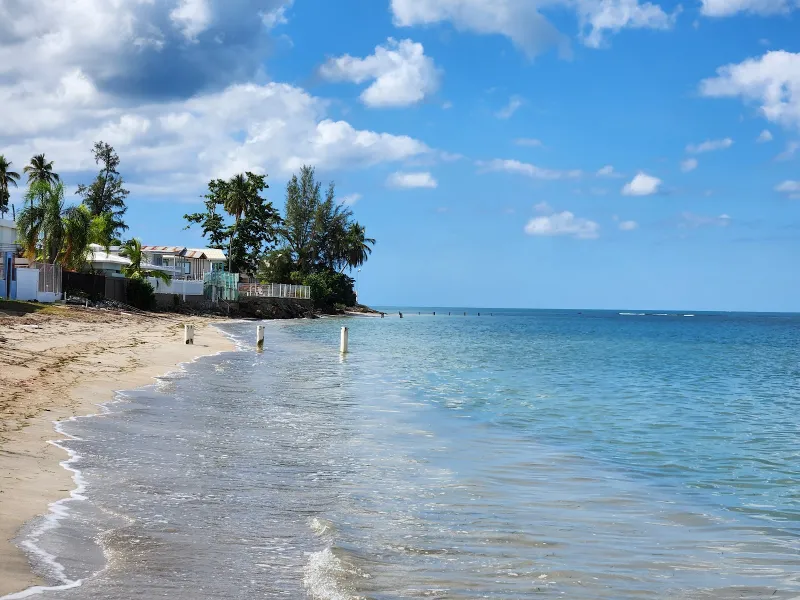
Joyuda Beach is a popular beach in Cabo Rojo, Puerto Rico, known for calm waters and families. A picturesque beach in Cabo Rojo's Joyuda neighborhood along Highway 102, renowned for its calm, shallow waters perfect for families and swimmers. Facilities include on-site dining, parking.
- Fishing
- Popular
- ✓ Food & Drinks
- ✓ Parking
- ✓ Water Sports
Short path.
Year-round destination thanks to the calm Caribbean-side waters.
Waters are shallow and calm, making this a safe swimming area for families. Watch for boat traffic near the shore where operators launch trips to Isla del Ratón.
Swim with a buddy and know your limits.
Free parking at the various restaurants along Highway 102 in Joyuda. No dedicated beach parking lot, but roadside spaces are plentiful on weekdays. Weekend afternoons can be tight.
Ways to experience Joyuda Beach
Bookable tours and activities at and around this beach.
 Viator photoPopular Puerto Rico experienceAguadilla Tropical SnorkelingWe both love spending time in the ocean, that being surfing, bodysurfing, scubadiving, and swimming keeping safety our #1 priority, in order to have…◷ About 2 hours✓ Free cancellationFrom $98Check availability ↗Browse more tours on Viator ↗
We may earn a commission when you book through Viator links, at no extra cost to you.
About Joyuda Beach
A picturesque beach in Cabo Rojo's Joyuda neighborhood along Highway 102, renowned for its calm, shallow waters perfect for families and swimmers. The beach anchors a celebrated waterfront dining district featuring some of Puerto Rico's finest seafood restaurants, earning the area its reputation as the Golden Mile of Puerto Rican cuisine. Boat operators offer short excursions to nearby Isla del Ratón, where visitors can wade, snorkel among mangroves, and enjoy island picnics.
Local tips
What to Bring+
For Dining & Payments:
- Cash: Bring cash as a backup—while most restaurants accept credit cards, some smaller operations and boat operators only take cash. An ATM is available in Cabo Rojo town center but not directly in the Joyuda strip.
For Water Activities:
- Snorkel gear: Basic mask and snorkel gear lets you see small fish, crabs, and seagrass beds in the shallows.
- Water shoes: Helpful because the bottom has patches of seagrass, rocky areas, and occasional sea urchins mixed in with sand.
- Reef-safe sunscreen: Essential here—the mangrove and seagrass ecosystems are sensitive to chemical sunscreens containing oxybenzone and octinoxate. Bring mineral-based formulas with zinc oxide or titanium dioxide as active ingredients.
- Dry bag: If planning a boat trip to Isla del Ratón, bring a dry bag for your phone, wallet, and keys, as small panga rides can involve splashing and the island has no secure dry storage.
For Comfort:
- Cooler: Most boat operators allow passengers to bring their own supplies for the island trip.
- Light layer or windbreaker: For evening dining—the waterfront restaurants are mostly open-air, and the sea breeze after sunset can make damp swimwear uncomfortable.
History & Background+
Joyuda Beach occupies a small stretch of shoreline along Highway 102 in southwestern Puerto Rico, in the Joyuda barrio of Cabo Rojo. The area has become synonymous with seafood dining, with the strip of oceanfront restaurants along PR-102 colloquially known as the Milla de Oro (Golden Mile) of Puerto Rican seafood, a reputation earned over decades of family-owned establishments serving the daily catch.
Cabo Rojo was founded in 1771 by Nicolás Ramírez de Arellano, though the southwestern coast had been a center of human activity for centuries before formal Spanish settlement. The Taíno people maintained fishing villages along this coast, taking advantage of the shallow bays and mangrove-lined inlets that provided rich marine habitats. The name Cabo Rojo, "Red Cape," refers to the iron-rich red cliffs at the municipality's southern point, visible from ships approaching from the Mona Passage.
The Joyuda neighborhood developed historically as a fishing community, with local fishermen launching small boats from these shallow waters to work productive offshore fishing grounds. During the 1960s and 1970s, fishermen's families began selling prepared meals alongside fresh catches. What started as informal roadside operations evolved into the established restaurants that line PR-102 today. The shallow, calm waters are shaped by geography—the continental shelf extends further from shore here than on the northern or eastern coasts, creating broad areas of warm, relatively shallow water that support extensive seagrass beds and mangrove ecosystems. Isla del Ratón, the small mangrove-covered island visible just offshore, has become an informal weekend gathering point for boat excursions and snorkeling.
Nearby Attractions+
The Cabo Rojo area offers several notable attractions within short drives of Joyuda Beach, complementing a day of beach and dining with natural and cultural exploration.
- Cabo Rojo Salt Flats (Salinas de Cabo Rojo): About 20 minutes south, these striking evaporation ponds shift between pink, orange, and white depending on mineral content and algae blooms. The adjacent Cabo Rojo National Wildlife Refuge, managed by the US Fish and Wildlife Service, has trails through dry forest habitat and leads to the Los Morrillos lighthouse with views over dramatic red cliffs.
- Playa Sucia (La Playuela): At the southern tip of Cabo Rojo near the lighthouse, consistently ranked among the best beaches in Puerto Rico. The crescent-shaped beach sits below limestone cliffs and offers calm swimming water. The hike from the parking area takes about 20 minutes.
- Boquerón Beach: About 10 minutes south of Joyuda on PR-101, a public balneario with lifeguards, showers, restrooms, and a wide sandy beach. The adjacent village of Boquerón has its own strip of seafood restaurants, bars, and vendors selling oysters from roadside carts on weekend evenings.
- Boquerón Bird Refuge: Accessible from PR-301, this refuge protects mangrove wetlands hosting over 100 bird species. A boardwalk trail through the mangroves provides observation points for herons, egrets, pelicans, and migratory shorebirds.
Photos
Be the first to add a photo
Recent photos help others recognize the access point, water, and parking setup.
Reviews
No Puerto Rico Beach Finder reviews yet
Share whether access was easy, how the water felt, and what the next person should know.
Planning your visit
Explore by activity
Nearby beaches


Questions
Where is Joyuda Beach located?
Joyuda Beach is located in Cabo Rojo, Puerto Rico. The exact coordinates are 18.113292, -67.182124. You can use GPS navigation or follow signs to Cabo Rojo and look for beach access points.
Is Joyuda Beach good for swimming?
Yes, Joyuda Beach is a public beach open for swimming. The beach has calm waters, making it ideal for swimming.
What facilities are available at Joyuda Beach?
Joyuda Beach offers the following facilities: Food, Parking, Water Sports.
What activities can I do at Joyuda Beach?
Popular activities at Joyuda Beach include swimming, fishing. The beach is family-friendly and perfect for a day trip from Cabo Rojo.
Is there parking at Joyuda Beach?
Yes, Joyuda Beach has parking available.
Similar beaches
Discover more beaches
Explore 400+ beaches across the island with filters, maps, and detailed guides.
Explore all beaches