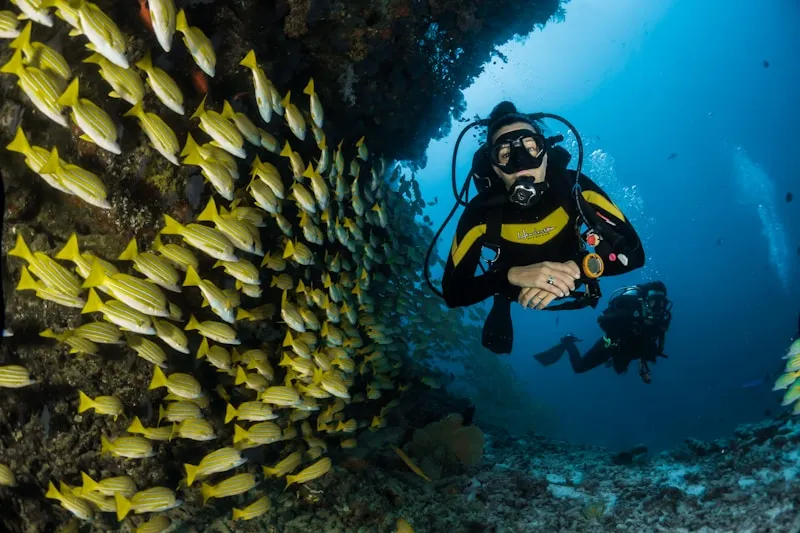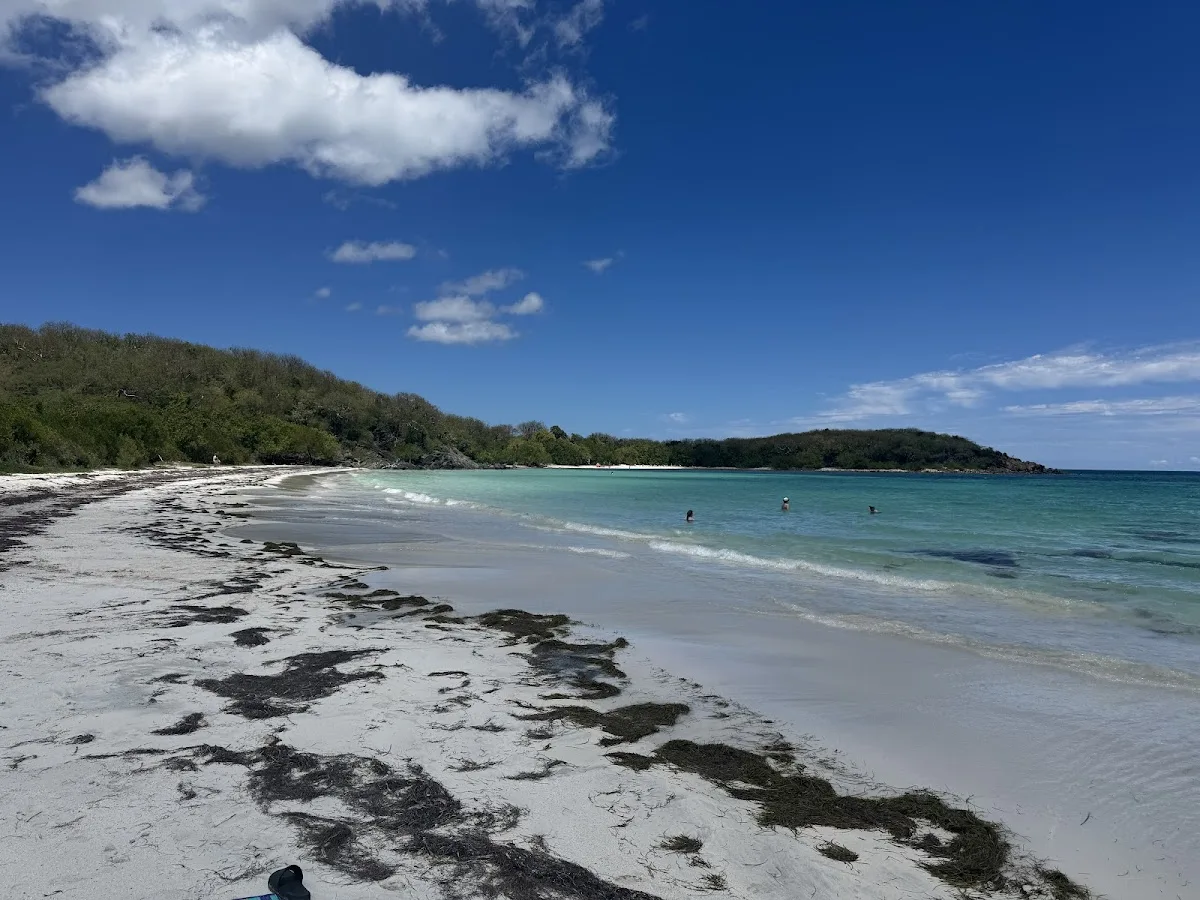
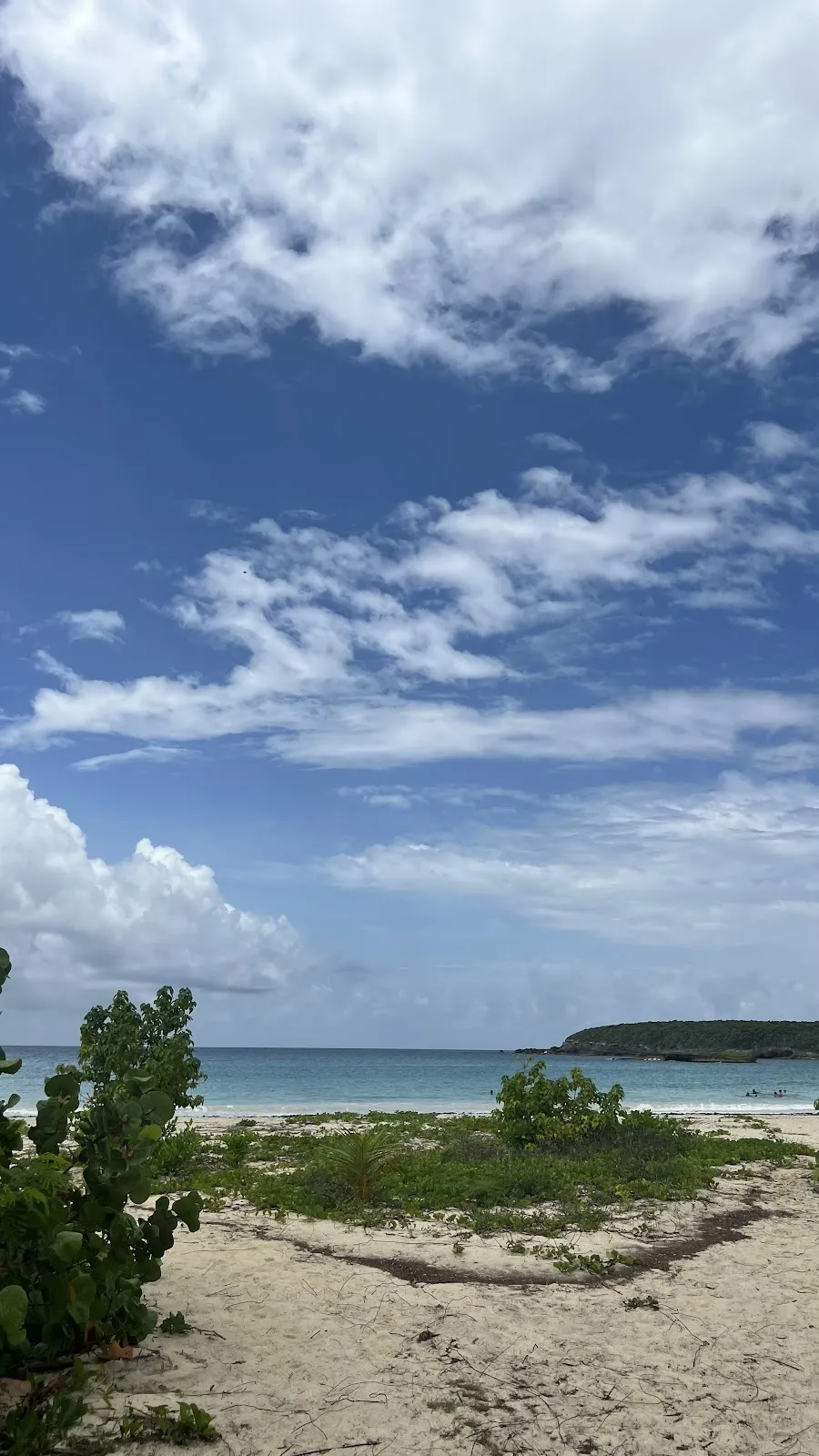
Playa La Plata is a secluded beach in Vieques, Puerto Rico, known for scenic views and its secluded atmosphere. Named "Silver Beach" for the way its white sand sparkles when touched by water, this secluded east-coast Vieques beach sits within the National Wildlife Refuge. Facilities include parking.
- Scenic
- Secluded
- ✓ Parking
10-min walk.
December through April provides the driest weather and calmest seas.
10-min walk.
Swim with a buddy and know your limits.
Informal dirt pulloff near the beach within the refuge. Space for 3-5 vehicles. A 4x4 is recommended for the unpaved access road.
Bring water, shade, and food for the day.
Ways to experience Playa La Plata
Bookable tours and activities at and around this beach.
 Viator photoPopular near this beachVieques: Sea Turtle Snorkeling Small-Group, Photos & Snacks⚠️IMPORTANT: This activity takes place on the island of Vieques, Puerto Rico. Guests must take the ferry ⛴️ to Vieques in order to participate in the…◷ About 2 hours✓ Free cancellationFrom $89Check availability ↗
 Viator photoPopular near this beachPrivate Island Kayak and Snorkel Tour in ViequesDiscover the vibrant underwater world of Vieques on this unique Private Island Kayak & Snorkel Tour. Paddle from shore to a secluded snorkeling site…◷ About 1 h 30 minFrom $120Check availability ↗Browse more tours on Viator ↗
We may earn a commission when you book through Viator links, at no extra cost to you.
About Playa La Plata
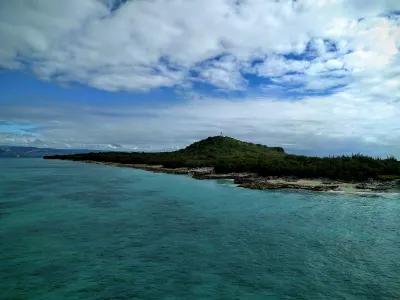
Named "Silver Beach" for the way its white sand sparkles when touched by water, this secluded east-coast Vieques beach sits within the National Wildlife Refuge. Flanked by rocky outcrops and green hills, it draws far fewer visitors than other refuge beaches, offering genuine seclusion and excellent snorkeling opportunities. A 4x4 vehicle is recommended for the unpaved access road.
Local tips
What to Bring+
Essentials for sun and hydration:
- Reef-safe sunscreen (SPF 30 or higher) – Puerto Rico's tropical sun is intense, especially between 10 AM and 2 PM
- Reusable water bottle – Bring plenty of water in a cooler; no vendors exist at or near this beach
- Hat or visor – Essential sun protection for extended beach time
- Portable beach umbrella or pop-up shade tent – Highly recommended, as natural shade may be limited
For snorkeling and underwater activities:
- Snorkel set (mask, snorkel, fins)
- Underwater camera – Optional, but useful for capturing the marine life and silver sand sparkle
- Rash guard or wetsuit – Protects skin from sun and coral contact
Food and supplies:
- Packed meals and snacks – Pack all supplies you will need; no food vendors are available
- First aid kit – Essential for a remote beach with no lifeguard or facilities
- Charged mobile phone – For emergencies and navigation
Optional for visitors seeking to capture the experience:
- Camera with extra battery and tripod – For sunset shots and the distinctive silver sand effect
- Binoculars – For coastal views and wildlife observation
History & Background+
Playa La Plata is located in the municipality of Vieques, an island municipality 8 miles off the southeast coast of Puerto Rico. Formerly used by the US Navy, Vieques has transformed into a nature and beach destination, offering a different pace from mainland Puerto Rico. The surrounding waters are influenced by both Atlantic and Caribbean currents, and the relative isolation has preserved the natural coastal environment.
Named "Silver Beach" for the distinctive metallic sparkle produced when fine white sand is touched by water, this east-coast beach sits within the Vieques National Wildlife Refuge. Flanked by rocky outcrops and green hillsides on both ends, the beach feels enclosed and private, like a natural amphitheater opening onto the Caribbean Sea. Located within the refuge but drawing far fewer visitors than nearby beaches like La Chiva or Sun Bay, it offers genuine seclusion most days.
The municipality of Vieques carries deep roots in Puerto Rico's history. Beaches like Playa La Plata reflect the ongoing relationship between coastal communities and the sea, whether visited by local families on weekends or travelers discovering the area for the first time.
Nearby Attractions+
Playa La Plata is situated in Vieques, which offers several attractions beyond the beach itself. The neighboring area of Isabel Segunda (the main town) is a short drive away and worth exploring to experience everyday Puerto Rican town life. For dining, look for local restaurants and roadside kiosks (chinchorros) serving traditional Puerto Rican fare, fresh seafood, mofongo, and tostones.
- Mosquito Bay: One of the brightest bioluminescent bays in the world, well worth a visit if you have extra time.
- Sun Bay: Another popular beach in Vieques with a different character worth exploring if you have time for beach hopping.
- Playa Grande (Vieques): Additional nearby beach option with distinct features.
- Playa Escondida and Pata Prieta (Secret Beach): Other secluded beaches in the Vieques area, each with a different character.
- Vieques town center: Features a central plaza with a church, local shops, and cafes. Many towns hold weekend markets or festivals throughout the year, particularly during patron saint celebrations (fiestas patronales) with live music, food, and cultural performances.
- Coastal food stalls: Weekend vendors selling empanadillas, bacalaítos (codfish fritters), and piraguas (shaved ice with fruit syrup) at affordable prices. Ask locals for their favorite spots—the best food is often at the least conspicuous establishments.
Photos
Be the first to add a photo
Recent photos help others recognize the access point, water, and parking setup.
Reviews
No Puerto Rico Beach Finder reviews yet
Share whether access was easy, how the water felt, and what the next person should know.
Planning your visit
Explore by activity
Nearby beaches

Questions
Where is Playa La Plata located?
Playa La Plata is located in Vieques, Puerto Rico. The exact coordinates are 18.117716, -65.37605. You can use GPS navigation or follow signs to Vieques and look for beach access points.
Is Playa La Plata good for swimming?
Yes, Playa La Plata is a public beach open for swimming.
What facilities are available at Playa La Plata?
Playa La Plata offers the following facilities: Parking.
What activities can I do at Playa La Plata?
Popular activities at Playa La Plata include swimming, snorkeling. The beach is perfect for a day trip from Vieques.
Is there parking at Playa La Plata?
Yes, Playa La Plata has parking available.
Similar beaches
Discover more beaches
Explore 400+ beaches across the island with filters, maps, and detailed guides.
Explore all beaches