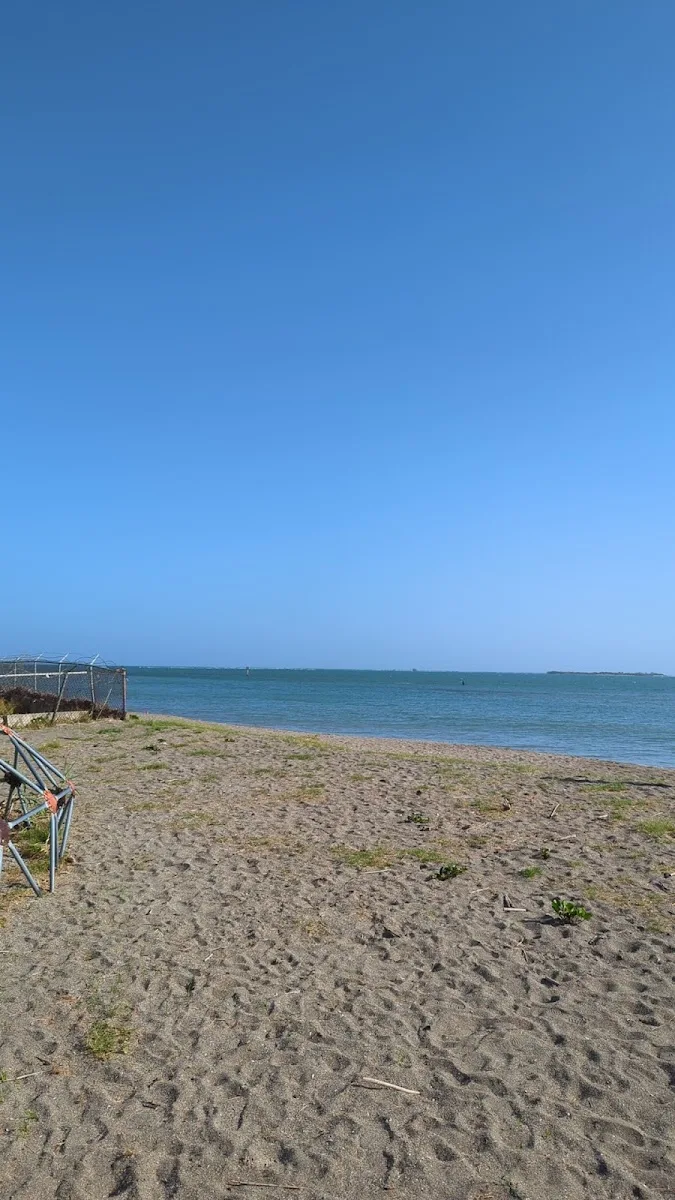
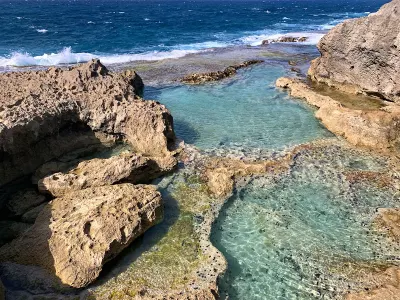
Playa perdida is a secluded beach in Ponce, Puerto Rico, known for scenic views and its secluded atmosphere. Secluded beach tucked along Ponce's southwestern coastline, true to its name of "lost beach.
- Scenic
- Secluded
Moderate hike.
Year-round access with the best conditions from December through April when rainfall is lowest.
Moderate hike.
Swim with a buddy and know your limits.
Informal pull-off area at the end of a rough dirt road. Space for 3-5 cars. No marked lot or paved surface. Higher-clearance vehicles are recommended.
Bring water, shade, and food for the day.
Ways to experience Playa perdida
Bookable tours and activities at and around this beach.
 Viator photoPopular Puerto Rico experienceTanama River Cave Tubingour tour is offered at the heart of a subtropical forest through private access and completely away from crowds. Following old trails left by our…◷ About 6 hours✓ Free cancellationFrom $99Check availability ↗Browse more tours on Viator ↗
We may earn a commission when you book through Viator links, at no extra cost to you.
About Playa perdida
Secluded beach tucked along Ponce's southwestern coastline, true to its name of "lost beach." This remote stretch offers genuine solitude with calm Caribbean waters and uninterrupted ocean views. Best suited for visitors who bring their own supplies and prefer a rugged, uncrowded setting with minimal amenities. The protected southern exposure provides consistently swimmable conditions year-round.
Local tips
What to Bring+
Sun and Water Protection
- Reef-safe sunscreen (SPF 30 or higher) – Puerto Rico's tropical sun is intense, especially between 10 AM and 2 PM
- Reusable water bottle – essential for hydration in the heat
- Hat or cap – for additional sun protection
- Swimsuit, goggles, and towel – for swimming and comfort
Food, Water, and Supplies
- All meals, snacks, and plenty of water – pack in a cooler; there are no food vendors at or near this beach
- First aid kit – no lifeguard present and limited cell coverage
- Portable beach umbrella or pop-up shade tent – highly recommended, as natural shade is limited
Optional for Scenic Activities
- Camera with extra battery and tripod – ideal for sunset shots and scenic photography
- Binoculars – for enjoying coastal views
History & Background+
Playa Perdida is located in Ponce, a municipality on Puerto Rico's southern coast and the island's second-largest city, known as the Pearl of the South for its rich architectural heritage. Situated on the Caribbean coast, this area benefits from calmer waters sheltered from Atlantic swells by the island's central mountain range, resulting in warmer water temperatures year-round and less wave action than the northern shores.
Living up to its name, Playa Perdida is tucked along Ponce's remote southwestern coastline, offering genuine solitude away from developed beaches in the region. No infrastructure surrounds this beach, keeping the coastline in its natural state with dry coastal scrub, rocky outcrops, and uninterrupted ocean views. The southern Caribbean exposure means generally calmer seas, making it ideal for visitors seeking a quiet retreat with a rugged, uncrowded character.
Nearby Attractions+
Playa Perdida is situated in Ponce, which offers several attractions beyond the beach itself and serves as a good base for exploring the region. The town center typically features cultural sites, local shops, and cafes where you can experience everyday Puerto Rican town life.
- Museo de Arte de Ponce – art museum well worth a visit if you have extra time
- Parque de Bombas – historic firehouse, a notable architectural landmark
- Juana Díaz – neighboring municipality worth exploring, a short drive away
- Esquinita María Playita, Parada Vista al Mar, and Punta Las Cucharas – other beaches in the Ponce area, each with different character worth exploring if you have time for beach hopping
- Local restaurants and roadside kiosks (chinchorros) – serving traditional Puerto Rican fare including fresh seafood, mofongo (mashed plantain with garlic), and tostones (fried plantain slices)
- Weekend markets and festivals – many towns hold weekend markets or festivals throughout the year, particularly during patron saint celebrations (fiestas patronales) featuring live music, food, and cultural performances
Photos
Be the first to add a photo
Recent photos help others recognize the access point, water, and parking setup.
Reviews
No Puerto Rico Beach Finder reviews yet
Share whether access was easy, how the water felt, and what the next person should know.
Planning your visit
Explore by activity
Nearby beaches



Questions
Where is Playa perdida located?
Playa perdida is located in Ponce, Puerto Rico. The exact coordinates are 17.973564, -66.678387. You can use GPS navigation or follow signs to Ponce and look for beach access points.
Is Playa perdida good for swimming?
Yes, Playa perdida is a public beach open for swimming.
What facilities are available at Playa perdida?
Playa perdida is a natural beach. Facilities may be limited, so consider bringing your own supplies.
What activities can I do at Playa perdida?
Popular activities at Playa perdida include swimming. The beach is perfect for a day trip from Ponce.
Is there parking at Playa perdida?
Parking near Playa perdida may be limited. It's recommended to arrive early, especially on weekends and holidays.
Similar beaches
Discover more beaches
Explore 400+ beaches across the island with filters, maps, and detailed guides.
Explore all beaches